Image to PDF & PDF Reader
- 3.0
- Rating
- 100.00K
- Installs
- Free
- Price
 Analysis by App-foxy
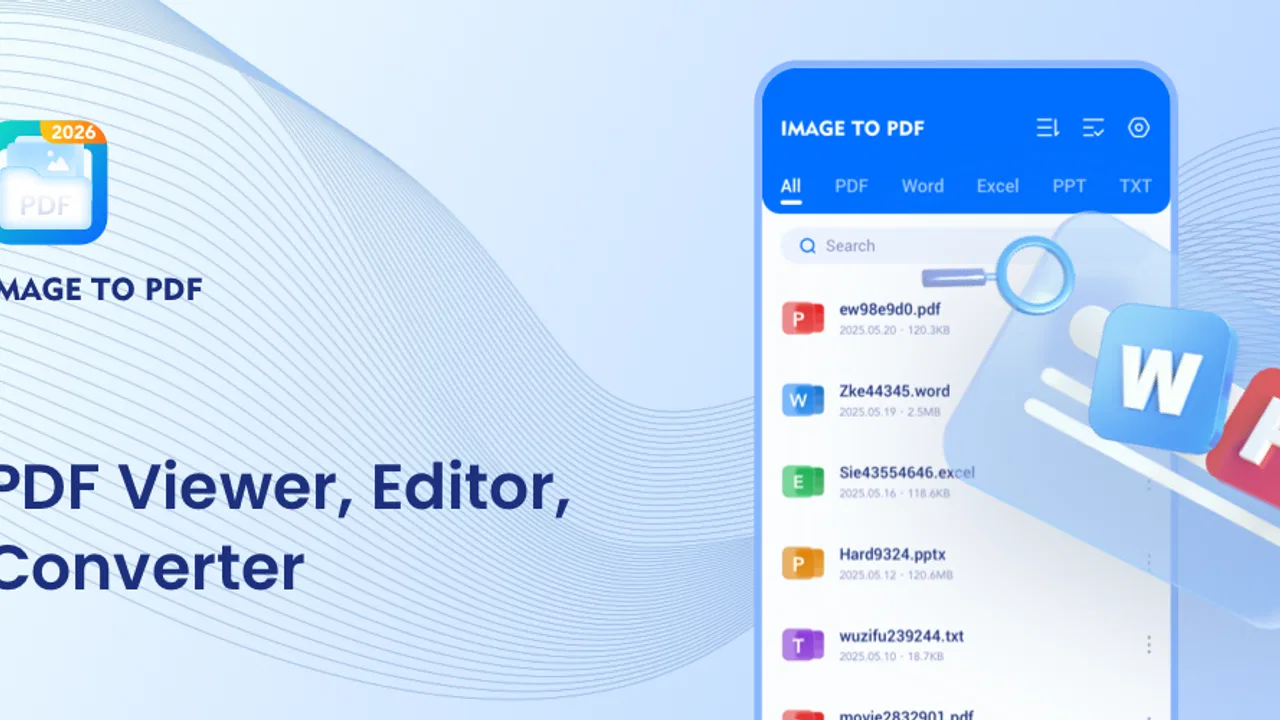
I tried Image to PDF & PDF Reader as a practical productivity app rather than as a full office suite, and that distinction matters. Its main job is straightforward: turn images into PDF files, then let me open, read, and make edits to PDF documents. For a household sharing one phone or tablet, that can be useful when someone needs to scan a school page, save a receipt, or send a group of photos as one document without moving to a computer.
The app is free, aimed at Everyone, and comes from JK Breaking News. It has reached over 100 thousand installs, with a 3.8 average from around 100 ratings and a small set of written reviews. Those figures suggest a modest but real user base, so I would treat it as a focused utility worth testing, not as a replacement for a mature document-management system.
How it fits into a shared household workflow
The most convincing use case is a quick handoff between people. Imagine one person receives a paper form, another needs to email it, and a third wants a copy stored with other household documents. Instead of sending separate image files through a family chat, I can use the app to bring the pages together as a PDF. That gives everyone one file to open and review.
You May Also Like

 Pandora - Music & Podcasts
Pandora’s Music Is Easy to Start, but Harder to Recover
Pandora’s strength is its low-effort path from a seed to a station. Its weak spot is how much confidence it asks you to place in connection, setup, and quiet recovery.

 8 Ball Pool
 Is Built on Rivalries, Rematches, and Routine
A close look at the rivalries, rematches, shared routines, and unanswered safety questions that turn a quick pool match into a persistent mobile community.

 Samsung Music
’s Quiet Strength Is Playing What You Already Own
Its reach comes less from spectacle than from dependable access to a personal library. That simplicity is both the app’s strongest retention engine and its ceiling.

 AccuWeather: Weather Radar
AccuWeather Review: A Quick, Clear Forecast for Everyday Decisions
For everyday plans, the best forecast is the one you can understand quickly. AccuWeather makes rain timing, radar, and local conditions easy to act on, with a few trade-offs.

 Hill Climb Racing
Why Hill Climb Racing Still Turns Crashes Into One More Run
A tiny car, a bumpy hill and one more upgrade: Hill Climb Racing keeps resurfacing because its simple chaos makes every near-miss feel personal.

 AliExpress - Shopping App
AliExpress Makes Global Shopping Feel Personal, but Shoppers Bear the Risk
AliExpress turns a global marketplace into a pocket-sized discovery engine. Its reach is useful, its shopping loop compelling, and its trade-offs easy to miss.
More From Our News Desk
View All News


This is especially handy for mixed-device homes. One family member may take pictures on an Android phone while another later reads the resulting document on a different device. Because the output is a PDF, the workflow is less dependent on a particular gallery app or messaging service. I still recommend checking the final file before sharing it, but the basic idea is refreshingly uncomplicated.
A useful everyday example is a child bringing home several pages from school. I can photograph each page, convert them into one document, and send that document to another adult instead of forwarding a string of pictures. The recipient can read the pages in order, and the original images remain separate if they are needed later. This is not a sophisticated records system, but it reduces small bits of household friction.
It also works for temporary coordination. If a household is comparing appliance manuals, collecting delivery paperwork, or preparing documents for an appointment, a PDF can act as a shared bundle. I would avoid treating the app as a permanent archive unless I had separately arranged reliable storage and backups. Its value is strongest at the moment of processing: gather, convert, inspect, and pass along.
What I would do before sharing a document
My first step would be to review every page visually. Image-to-PDF conversion can preserve the content while still producing a page that is sideways, badly cropped, or difficult to read. A quick page-by-page check catches mistakes before the file reaches a teacher, employer, landlord, or service provider.
I would also keep the source images until the recipient confirms that the PDF is usable. That is a small but important habit. If a page is missing or unreadable, having the originals makes it easier to rebuild the file rather than asking someone to photograph everything again.
For multi-person use, naming matters more than it first appears. A file named after its purpose and month is easier to find than one left with a generic camera-generated label. The app helps with the document conversion itself, but the household still needs a simple naming routine. I found that this boundary keeps the tool useful without expecting it to organize an entire family’s digital life.
Setup is simple, but expectations should stay modest
The app runs on Android 8.0 or later, and its current version is 1.0.3. That makes it accessible to many older phones, which is helpful in a home where the newest device belongs to one person and an older handset is shared by everyone else. I would still check the phone’s available storage before processing a large batch of high-resolution pictures.
I did not approach it expecting account-based collaboration, synchronized household libraries, or separate spaces for different users. Those are important distinctions. A shared-device utility can help people create and read files, but it does not automatically create boundaries between the documents of different household members. If several people use the same phone, each person needs to pay attention to which files are being opened, edited, and passed on.
That limitation is not necessarily a problem for occasional use. For a quick conversion at the kitchen table, extra accounts could make the process slower. On the other hand, a family that regularly handles confidential forms, financial paperwork, or work documents may prefer a more established document service with clearer user separation and stronger organizational tools.
The app’s free price makes experimentation easy. I can install it for a specific task without committing to a subscription. Still, free does not mean every workflow will feel complete. If I need detailed formatting, extensive annotation, cloud collaboration, or advanced document security, I would compare it with a dedicated PDF editor or the document tools already built into my storage platform.
Coordinating edits without stepping on each other
The phrase “make edits” deserves a practical interpretation. I would use the app for light document adjustments and review rather than assume it offers the depth of a desktop publishing program. When several people share responsibility for a file, it is safer to agree on who is making the next change and where the finished copy will be kept.
A simple household workflow is to keep one untouched original, create a working copy, and only share the working copy after checking it. This is particularly useful when an adult is helping a child prepare a form or when two people are reviewing a document together. It avoids the confusing situation where one person opens a file while another is still trying to replace a page.
Another practical tip is to process related images in one sitting. If I am converting receipts, I would gather that group together rather than mixing receipts with school pages and personal photographs. This reduces the chance of sending the wrong page and makes the resulting PDF easier for someone else to understand.
For a shared tablet, I would also close the document when finished and return to the app’s normal screen before handing the device to another person. That is not a special privacy feature; it is simply good shared-device etiquette. The app can open documents, but the people using the device remain responsible for deciding when a file should no longer be visible.
Age context and trust in a family setting
The Everyone age rating makes the app suitable in a broad age context, and its purpose is easy enough for a teenager or older child to understand with basic guidance. That does not mean every document is appropriate for every household member to handle. A young user might be perfectly capable of converting homework pages while still needing an adult to supervise identity documents, medical paperwork, or financial records.
I would explain the difference between operating the tool and deciding what may be shared. The app can help create a PDF, but it cannot replace a family rule about permission. Before a child sends a document, an adult should check the recipient, the pages included, and whether the file contains private details. This is especially important when several people use the same device and notifications or recent files may be visible.
Trust also affects whether the app is a good fit for a particular home. If everyone is comfortable sharing one local workflow and checking files manually, its simplicity is an advantage. If household members need strict separation, individual workspaces, or formal control over access, I would choose a different solution designed around those needs instead of trying to force this focused utility into that role.
The developer name, JK Breaking News, may seem unusual for a document tool, so I would keep my expectations grounded in the app’s actual purpose rather than assuming it belongs to a large productivity ecosystem. The current version is useful to test, but families handling important records should still keep independent copies and avoid making one app the only place where essential documents exist.
Where it beats familiar alternatives
Compared with simply sending several images through a messaging app, this tool gives me a cleaner document-shaped result. A PDF is easier to read in sequence, easier to forward as one attachment, and less likely to become scattered across a conversation. That is its clearest everyday advantage.
Compared with a full office suite, it is less intimidating for a narrow task. I do not need to open a large editor just to combine photographed pages into something readable. This can be a benefit for an older relative or a family member who wants a direct path from image to document.
Compared with a scanning app, the experience may be less suitable when the most important requirement is automatic capture quality, optical character recognition, or careful perspective correction. Someone who regularly digitizes paperwork should compare those capabilities before settling on this app. For occasional image conversion and PDF reading, the lighter approach may be enough; for a serious scanning routine, a specialized scanner is likely the better choice.
Compared with a cloud document platform, it is better viewed as a hands-on file utility than as a collaboration center. A cloud service may be preferable when several people need live access, comments, version history, and a dependable shared folder. I would choose this app when the immediate need is processing a file, not managing a long-running team project.
Small workflow details that make a difference
One non-obvious strength is that the image-to-PDF step can simplify communication even when the source material is messy. A household may have pages arriving from different people at different times. Collecting them into one reviewed file creates a clear handoff point. The important discipline is to confirm page order before sending, because a technically successful conversion can still produce a confusing document if the images were selected carelessly.
A second useful insight is that PDF reading can be valuable after the conversion, not just before it. I can inspect the finished document in the same general workflow instead of immediately switching to another app. That makes it easier to catch a blank page, an upside-down image, or a page that is too dark to read. I would treat this review pass as essential when the document matters.
A third trade-off concerns shared responsibility. The app lowers the technical barrier, but it does not decide which version is authoritative. In a family, two people may each edit or recreate a document and end up with competing files. Keeping an original and clearly labeling the reviewed copy prevents that problem more effectively than relying on the app alone.
A fourth tip is to separate conversion from long-term storage. After creating a useful PDF, I would place it in the household’s chosen storage location and keep a backup when the document is important. This app can be the bridge between paper or images and a portable file, but a bridge is not the same thing as an archive.
Who should use it, and who should look elsewhere
I would recommend it to someone who wants a free, focused way to turn photos into PDFs and read or lightly adjust those files on an Android device. It suits students, households, occasional form handling, and anyone who dislikes opening a complex office application for a small job.
I would be more cautious about recommending it to a business user who needs a documented workflow, extensive permissions, searchable text, advanced annotations, or dependable team collaboration. Those needs call for a more specialized or established platform. I would also skip it if the main goal is professional scanning quality rather than straightforward image conversion.
The rating of 3.8 from roughly 100 users gives me a balanced impression: enough feedback to show that people are trying it, but not enough to treat the score as a definitive verdict. I would install it for a real but low-risk task first, such as combining household reference pages. That trial reveals whether its editing and reading flow suit the way the family actually works.
My household verdict
After using it as a practical document helper, I see Image to PDF & PDF Reader as a useful middle ground. It is more organized than sending loose images, yet much less ambitious than a complete document-management suite. The free access and broad age rating make it easy to introduce into a shared household workflow, especially when one person needs to prepare a file and another needs to read it.
My recommendation comes with one clear condition: keep the boundaries outside the app. Decide who may handle sensitive documents, retain originals, check the final page order, and store important PDFs somewhere dependable. With those habits, the app’s focused design becomes an advantage rather than a weakness.
For quick image-to-document jobs, I would keep it available on a shared Android device. For formal collaboration, private multi-user workspaces, or professional scanning, I would choose a stronger alternative. In its proper lane, though, it does exactly what I want from a small productivity tool: it turns an awkward pile of images into a file that the household can actually use.
FAQs for Image to PDF & PDF Reader
01What is Image to PDF & PDF Reader used for?
Image to PDF & PDF Reader is designed to convert pictures and scanned documents into PDF files directly from a mobile device. You can typically import images from your gallery, capture pages with the camera, arrange them in the correct order, and save or share the finished document. It also works as a basic PDF reader for opening, viewing, and managing saved files.
02Can I convert multiple images into one PDF document?
Yes, the app is mainly useful when you need to combine several images into a single PDF. After selecting the pictures, you can usually reorder pages before creating the file, which is helpful for receipts, notes, forms, school assignments, and scanned paperwork. Check the preview carefully before saving, because image orientation, cropping, and page order can affect the final document.
03Does Image to PDF & PDF Reader work without an internet connection?
Many of the core functions, including selecting images, converting them into PDFs, and reading files already stored on your phone, can generally be used offline. However, internet access may be required for advertisements, cloud-related features, online sharing services, updates, or certain premium tools. Offline availability can also vary by device and app version, so test the functions you need before relying on it while traveling.
04Can I edit, scan, or share PDF files with the app?
The app usually provides practical document tools beyond simple conversion, such as scanning pages with the camera, adjusting image quality, rotating pages, and sharing completed PDFs through messaging or email applications. Its editing capabilities may be more limited than those of a full professional PDF editor. If you need advanced text editing, signatures, annotations, or form filling, review the available tools and premium requirements first.
05Is Image to PDF & PDF Reader free to download and use?
The application may be available as a free download, but some functions can be supported by advertisements, in-app purchases, or a subscription. Basic image-to-PDF conversion and document viewing are often accessible without payment, while extra options such as removing ads, higher-quality exports, advanced scanning, or additional file management tools may require an upgrade. Check the current store listing for exact pricing and limitations before downloading.
Pros
- Converts multiple images into a single PDF quickly.
- Supports common image formats such as JPG and PNG.
- Built-in PDF reader makes reviewing created files convenient.
- Useful for scanning receipts
- notes
- and documents on the go.
- Simple interface is easy for first-time users to understand.
Cons
- Some advanced tools may require a premium upgrade.
- OCR accuracy can vary with blurry or poorly lit images.
- Large image batches may take longer to process.
- Ads may interrupt use in the free version.
- PDF sharing and export options can be limited on some devices.

Image to PDF & PDF Reader
Gallery